Finding the Right Window Shades for New York Homes and Workspaces
In New York, window shades must do more than decorate a room. They may need to soften intense afternoon sun, reduce reflections on a home office screen, protect furnishings from ultraviolet exposure, and provide privacy from nearby buildings—all without consuming valuable floor or wall space.
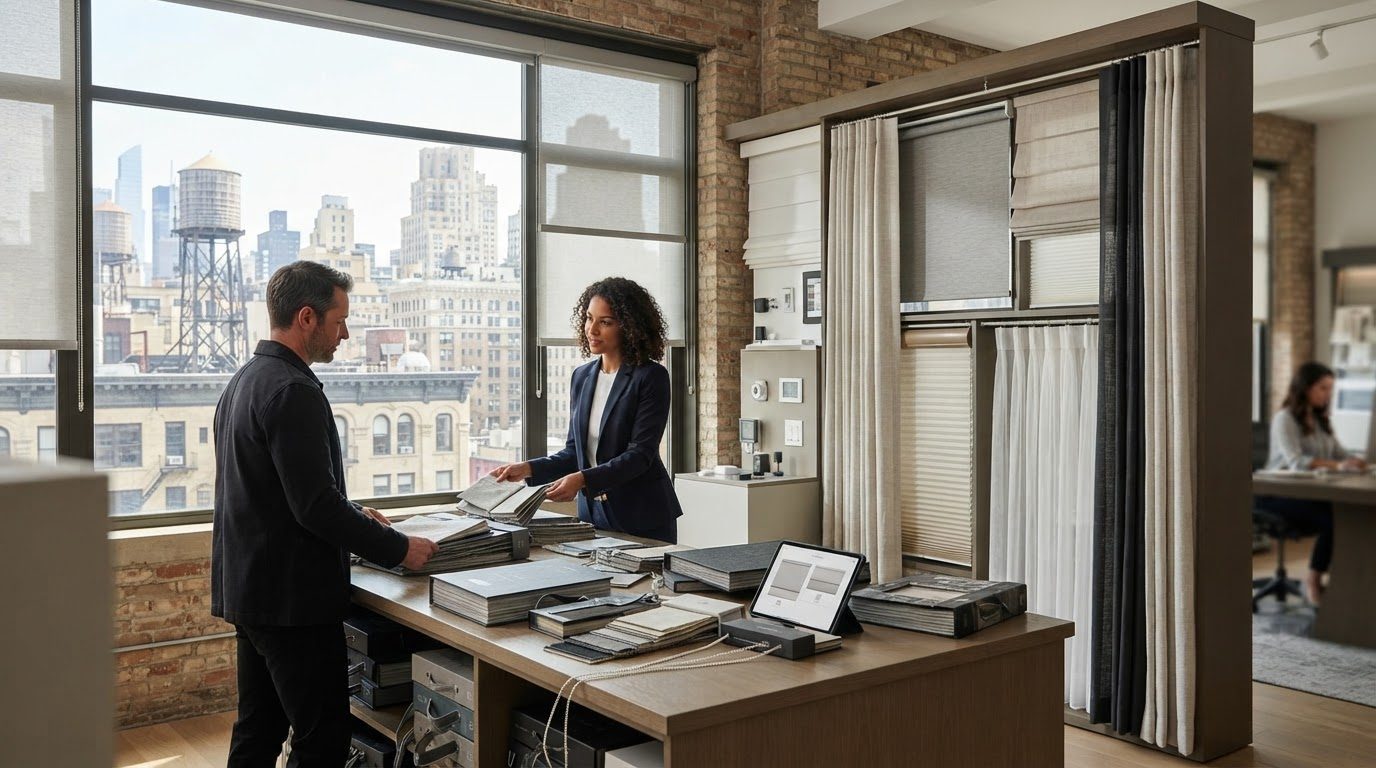
The phrase Shades store New York can refer to anything from a retail showroom to a custom-treatment company serving apartments, offices, and multi-unit buildings. The important distinction is whether the provider can evaluate the window, explain performance differences, and deliver a properly measured installation rather than simply sell an off-the-shelf product.
A consultation with The Blinds Source can help organize those decisions around light direction, room use, window dimensions, interior design, and operating preferences. The goal is not the most elaborate treatment; it is a solution that performs reliably in the actual space.
What to Look for in a New York Shades Store
Dense urban housing creates unusual window-treatment challenges. A south- or west-facing apartment may receive strong solar heat and glare, while a street-level room may need privacy without becoming dark. Buildings can also have deep window wells, narrow trim, radiators beneath windows, or restricted access that affects installation.
A capable provider should offer:
- An in-home or on-site consultation for measuring windows and reviewing architectural constraints.
- Fabric samples viewed in the room’s actual daylight.
- Guidance on openness factor, opacity, insulation, mounting depth, and control methods.
- A written estimate that separates product, fabrication, motorization, delivery, and installation.
A showroom visit is useful for comparing operating systems, hardware, and full-size samples, but it cannot reveal every condition in an apartment. A virtual consultation is convenient for an initial discussion if the customer can provide accurate photographs, approximate dimensions, and room orientation. An on-site estimate is the most reliable option when windows are oversized, unusually shaped, recessed, arched, or difficult to access.
Measurement accuracy matters. A small error can produce light gaps, uneven reveals, binding fabric, or a shade that conflicts with a window handle. Professional installers typically record width at multiple points, check squareness, note obstructions, and determine whether an inside or outside mount is appropriate.
Shade Styles for Light, Privacy, and City Views
Each shade category balances light control, appearance, insulation, and view differently.
- Roller shades: Clean and space-efficient, with fabrics ranging from translucent to blackout. They suit modern apartments, compact windows, and layered treatments.
- Solar shades: Made with open-weave screen fabric that reduces glare and UV exposure while preserving an outward view. However, they provide limited nighttime privacy when interior lights are on.
- Roman shades: Fabric folds add softness and visual weight. They work well in living rooms and bedrooms but require more projection than a basic roller shade.
- Cellular shades: Honeycomb construction traps air and improves insulation. They are useful near cold glass, drafty windows, or rooms that experience significant temperature swings.
- Woven wood shades: Natural grasses, reeds, and woods introduce texture and can complement traditional, coastal, or organic interiors. Their privacy and light control depend on weave tightness and lining.
- Pleated shades: Lightweight and versatile, with a compact stack. They can be a practical choice where a low-profile treatment is important.
For bright south-facing rooms, solar shades with a suitable openness factor can reduce glare while keeping the skyline visible. Lower openness generally blocks more light and increases privacy but reduces the view. Street-level windows often benefit from privacy or light-filtering fabrics, while bedrooms may require blackout lining or side channels to minimize early-morning light.
Privacy is directional and time-dependent. A translucent shade may obscure daytime views from outside while revealing the interior at night. If nighttime privacy is essential, choose a privacy fabric, blackout option, or layered combination.
Special windows require planning:
- Wide windows: Use multiple shades with aligned fabric or a continuous headrail where product limits permit. Separate shades offer better room-by-room control but may create small gaps.
- Bay windows: Each section usually needs independent measurement and careful clearance checks at the corners.
- Floor-to-ceiling glass: Consider motorization, intermediate support, glare control, and whether the shade can be mounted without interfering with doors or HVAC grilles.
New York’s seasonal contrast also matters. Summer solar gain and air-conditioning loads may favor reflective or solar fabrics; winter drafts near older windows may justify cellular shades and drapery.
Custom Blinds, Shades, Drapery, and Layered Treatments
Layering combines the strengths of different treatments. A solar or light-filtering shade can preserve daytime views, while side panels or drapery add softness, nighttime privacy, and insulation. A blackout roller behind decorative curtains can make a bedroom more effective without requiring heavy fabric across the entire window.
Design decisions include:
- Opacity: Sheer, translucent, room-darkening, and blackout fabrics serve different purposes.
- Color: Light colors can reflect solar energy; darker shades may improve glare control but absorb more heat.
- Texture: Linen-like materials, woven fibers, and smooth technical fabrics create distinct visual effects.
- Trim and hardware: Decorative bands, hems, rods, and valances can connect treatments to furniture and architectural details.
Custom fabrication is particularly valuable in prewar apartments, historic buildings, luxury interiors, and commercial spaces. Uneven plaster, nonstandard mullions, shallow recesses, and tall windows are difficult to solve with standard sizes. A custom treatment can also follow designer specifications for fabric continuity, seam placement, mounting height, and finish.
Coordination should include wall color, flooring, upholstery, built-ins, molding, and existing hardware. In an office, the treatment must also account for monitor reflections, conference-room privacy, fire-safety requirements, and consistent appearance across multiple rooms.
Motorized Shades and Smart-Home Control in NYC
Motorization is practical when windows are tall, numerous, oversized, or located behind furniture. It is also useful for people with limited mobility and for rooms where coordinated adjustment is important. A motorized system can operate one shade, a group of shades, or an entire room through a remote, wall control, or app.
Typical functions include:
- Room-by-room operation.
- Scheduled opening and closing.
- Preset scenes for waking, entertaining, or reducing afternoon glare.
- Remote control when occupants are away.
Systems such as Somfy and Lutron can support different levels of control. Simple motorization may mean a battery-powered shade operated by remote. Fully integrated automation can connect shades with lighting, occupancy sensors, thermostats, and audiovisual systems through a programmed control platform. Those are different scopes and should be priced separately.
Battery motors simplify retrofit work because they avoid opening walls, but batteries eventually require replacement or charging. Wired power is better for frequent operation, very large shades, and permanent installations, though it may require electrical planning. A qualified installer should discuss outlet locations, low-voltage wiring, access panels, signal range, and whether building approval is necessary.
Cordless and motorized products can also improve child safety. For commercial projects, confirm accessibility, control placement, and maintenance requirements. Quiet motor performance is especially important in bedrooms, nurseries, and meeting rooms.
Planning a Shades Project From Estimate to Installation
A well-managed project normally follows this sequence:
- Consultation and review of goals, rooms, light exposure, privacy needs, and design preferences.
- Professional measurements, including width, height, depth, squareness, and obstructions.
- Product selection using samples, specifications, and operating-system comparisons.
- A written estimate covering fabrication, delivery, installation, taxes, and optional motorization.
- Fabrication, with lead times depending on material availability, custom dimensions, and control technology.
- Installation, leveling, programming, and final adjustment.
- Completion review covering operation, cleaning, warranty documentation, and service contacts.
Before signing, ask:
- What is the expected lead time, and what could delay production?
- Who performs the measurement and installation?
- What does the warranty cover—fabric, hardware, motors, labor, or batteries?
- Is repair service available locally?
- How should each fabric be cleaned?
- Are samples available to take home?
- Does the estimate include removal of existing treatments and disposal?
Pricing varies substantially. Basic manual roller or cellular shades may begin around $150–$400 per window installed. Custom Roman shades, woven woods, and layered treatments commonly range from $500 to more than $1,500 per opening. Motorization may add approximately $300–$1,000 or more per shade, while integrated control systems can increase the project total substantially. Oversized windows, premium textiles, difficult access, and extensive wiring raise costs.
Installation checklist
Before the installer arrives:
- Clear furniture, plants, artwork, and fragile objects from the window area.
- Confirm building rules for elevator reservations, service entrances, drilling, and work hours.
- Identify outlets, radiators, alarm sensors, window contacts, and HVAC registers.
- Secure pets and arrange access to every room included in the order.
- Keep the approved estimate, fabric names, control instructions, and warranty documents available.
- Tell the installer about future painting, molding, cabinetry, or renovation work.
The strongest shade project treats window coverings as a coordinated performance system: fabric controls light, mounting determines fit, operation affects convenience, and installation determines durability. In New York’s compact, highly exposed interiors, that combination is more valuable than choosing a style based on appearance alone.