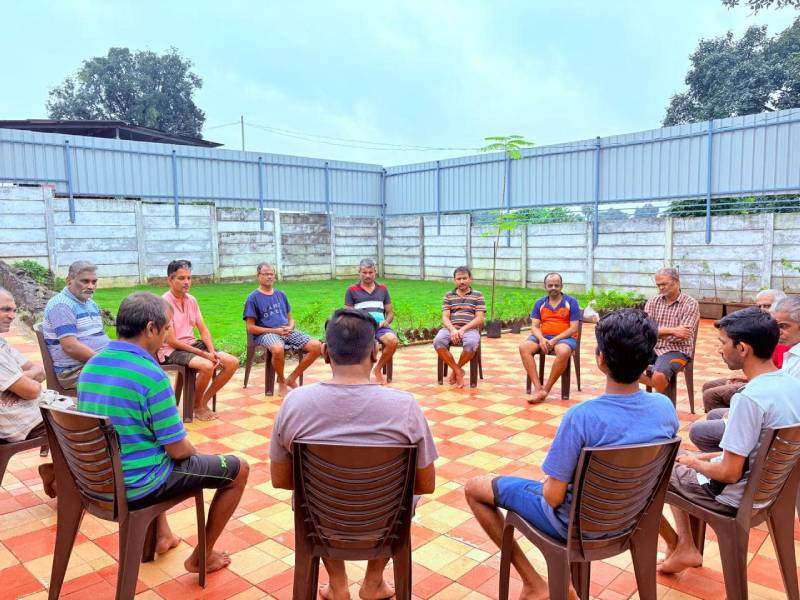
Mumbai Rethinks Recovery: Body, Mind, Family, Food
Mumbai is moving toward a holistic approach to addiction recovery that works on four fronts at once. Body care through medical detox and movement, mind work through therapy, family counselling for the home environment, and food planning to rebuild what years of substance use stripped away.
There appears to have been a shift in the language around treatment within the city. Holistic approach to addiction recovery in Mumbai has now become the go-to modality that many counsellors prescribe before anything else, rather than as an additional option. While families used to be concerned about the duration of detox and when the person could leave, they now enquire about the therapist’s qualifications, the schedule for yoga classes, meal planning, and the number of family sessions.
Body
For the body, the process begins with medical detoxification. A doctor oversees the withdrawal process, prescribes medicine when necessary, and looks out for potential problems. Alcohol withdrawal is particularly perilous and cannot be safely attempted at home.
Post-detoxification, the body needs time to heal. Yoga, breathing techniques, walking, and perhaps light gym exercises on a daily basis are essential. Sleep is also monitored since the majority of individuals in early recovery do not sleep well for many weeks. Some rehabilitation facilities in Mumbai may introduce ayurvedic treatment or natural healing as an alternate modality.
Mind
Change occurs in therapy. Cognitive-behavioural therapy (CBT) is frequently used as it provides the client with techniques that they can employ even on the same day of the consultation. Motivational interviewing deals with the ambivalence that almost all clients have when they come for therapy. Group therapy provides the peer mirror that many clients report shattering denial more quickly than anything else.
A mental health assessment is equally important in these scenarios. Depression, anxiety, post-traumatic stress disorder (PTSD), attention-deficit hyperactivity disorder (ADHD), and occasionally bipolar disorder co-occur under addiction in quite a few cases. Failure to address both the substance abuse and the mental health condition usually results in a return to substance abuse within a few months.
Family
This is the pillar that makes families nervous. People are used to taking a family member in and getting him back as a packaged deal. But now the clinics in Mumbai demand family treatment, and their logic cannot be contested. It is in the family setting that the patient will return. Family dynamics, financial enablement, conflict avoidance, and silence about the problem will determine whether he can sustain his recovery.
Family treatment involves teaching communication skills, boundary setting, and even coping mechanisms of the spouse or parents. It may take weeks before any open discussion takes place. Family treatment often outlasts inpatient treatment.
Food
The least emphasised pillar is the food pillar. Yet it is crucial when dealing with addiction problems. A body dependent on alcohol or medications for many years will have a deficiency in vitamin B, magnesium, protein, and good fats. His digestive system will most likely be impaired.
The dietitian in the recovery plan will gradually restore meals. Three meals, snacks, balanced macronutrients, and fluid intake will be monitored. Caffeine and sugars are also monitored since both cause an increase in anxiety levels during the early stages of recovery. Within a few weeks, sleeping patterns become better, moods stabilise, and energy levels come back.
How the Four Pillars Work Together
None of the four pillars can work alone. The detoxification process without the therapy process results in the patient leaving the facility sober but unchanged. The therapy process without nutrition will make it impossible for the individual to concentrate in the session. The family therapy process without the patient’s personal rehabilitation process leads to finger-pointing.
The processes are integrated and kept parallel to each other since addiction itself operates on parallel processes.
Frequently Asked Questions
How long does such a process take in Mumbai?
Most inpatient rehab facilities last between 28 and 90 days, with outpatient services for six to twelve months after discharge.
What does it cost?
Programs in the city range from around Rs 60,000 for a basic 28-day stay to several lakhs for longer multi-discipline plans.
Is family attendance required?
Most centres strongly recommend family sessions, and some treat them as a non-negotiable part of the plan.
Can the patient eat normal food?
Meal plans are designed by dietitians and use regular ingredients, with adjustments for nutritional gaps left by long-term substance use.
Final Thought
Recovery is rarely fixed by one thing alone. Body, mind, family, and food carry equal weight inside this model, and that balance is what most Mumbai families are now looking for when they pick a program.
Featured Image Source: https://elitefoundation.co.in/wp-content/uploads/2025/09/IMG-20250907-WA0009.jpg