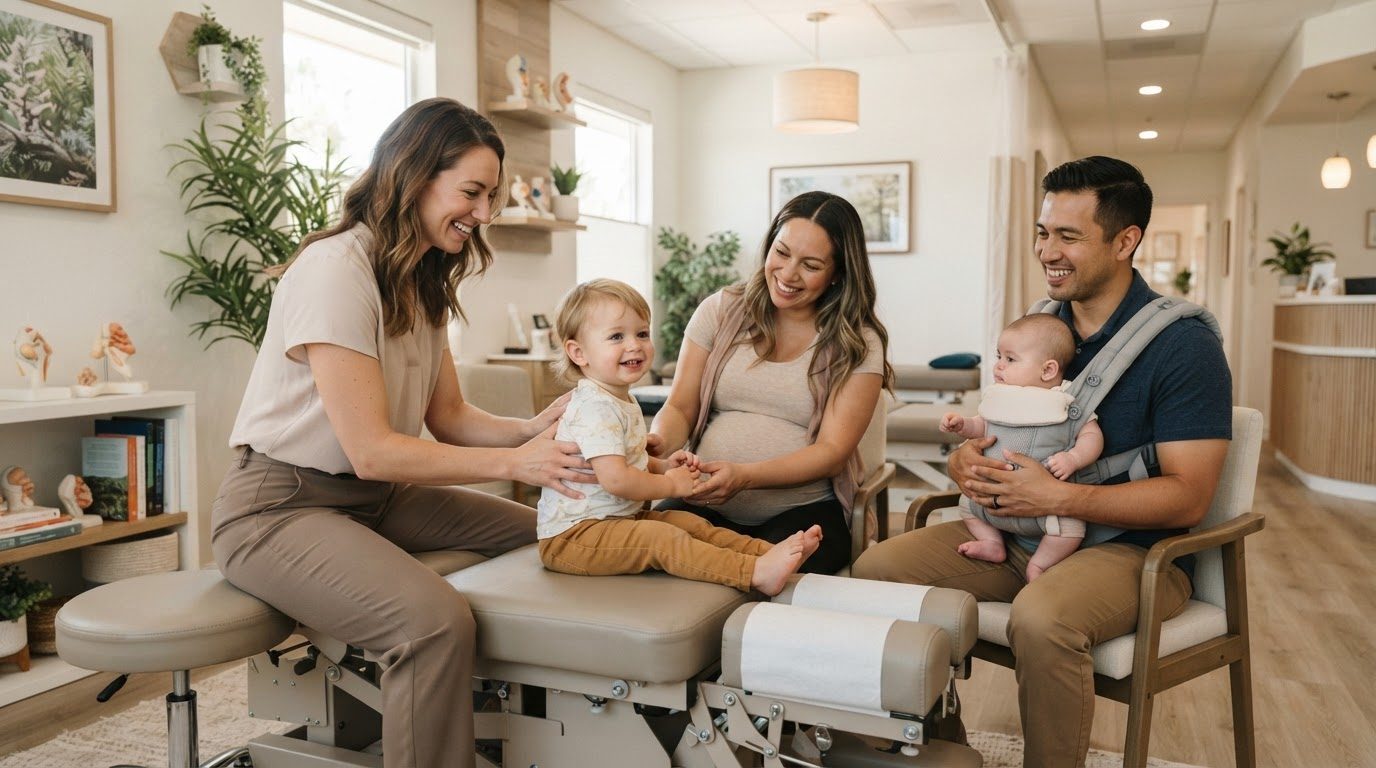
Family-Centered Chiropractic Care for Costa Mesa Families
Finding healthcare that accommodates a newborn, a growing child, an expectant parent, and other adults can be challenging. A family chiropractor should offer more than a one-size-fits-all adjustment: care should reflect each person’s age, health history, movement patterns, comfort level, and goals.
Families searching for a Family Chiropractor In The Area may be comparing credentials, pediatric and prenatal training, appointment logistics, and communication style—not simply looking for the closest office. Those factors matter when several household members may need different types of evaluation.
In Costa Mesa and the broader Orange County area, Blooming Chiropractic presents a family-oriented setting where parents can ask questions and bring children along. Before scheduling, remember that chiropractic care is not a substitute for emergency evaluation, pediatric medical care, or treatment for symptoms requiring urgent diagnosis.
A Welcoming Approach to Care for Every Stage of Family Life
A family visit should support connection and convenience without assuming that everyone needs the same intervention. One adult may be managing neck tension from computer work, while another is pregnant, a child has a posture concern, and an infant simply needs an age-appropriate assessment.
A comprehensive intake considers:
- Daily movement, exercise, sleep, work, and caregiving demands.
- Pregnancy, postpartum recovery, feeding positions, lifting, and interrupted sleep.
- Stress, pain patterns, prior injuries, surgeries, medications, and relevant diagnoses.
- Neurological symptoms, including numbness, weakness, changes in coordination, or radiating pain.
Chiropractic assessment typically focuses on the neuromusculoskeletal system: the spine, joints, muscles, and related movement patterns. A responsible clinician should explain what the examination can and cannot determine, identify when imaging or medical evaluation may be appropriate, and avoid presenting an adjustment as a cure-all.
Seek urgent medical attention for symptoms such as sudden severe headache, chest pain, difficulty breathing, loss of bowel or bladder control, progressive weakness, major trauma, seizure, or sudden confusion. Children with significant fever, lethargy, breathing difficulty, dehydration, or a serious injury should be evaluated promptly by a pediatric medical professional.
Gentle Chiropractic Care for Infants and Children
Pediatric chiropractic visits must be adapted to a child’s age, size, development, communication ability, and tolerance. Techniques used with an infant should not be treated as smaller versions of adult manipulation. The practitioner should explain the method, pressure, positioning, expected sensations, and alternatives before proceeding.
An initial pediatric visit may include:
- A conversation with the parent or caregiver about the concern and relevant birth, developmental, and medical history.
- Observation of posture, spontaneous movement, gait, symmetry, and how the child responds to handling.
- A focused examination appropriate to the child’s age and cooperation.
- Discussion of whether chiropractic care is suitable, whether additional information is needed, or whether referral is more appropriate.
Parents commonly ask whether an infant will experience forceful pressure. They should be able to observe the process, pause the visit, and ask for clarification at any time. A calm office, flexible positioning, and permission for breaks can help children feel secure.
Families may request an evaluation for tension, posture changes, growing-body discomfort, altered movement, or musculoskeletal concerns. These are reasons to assess a child—not promises that chiropractic treatment will resolve the issue. Claims that adjustments treat infections, allergies, developmental disorders, immune conditions, or other medical diseases deserve careful scrutiny.
Discuss a pediatric concern with the child’s pediatrician first when symptoms are new, persistent, severe, associated with fever or illness, follow an injury, or involve developmental regression, weakness, unexplained weight loss, unusual sleepiness, or significant changes in behavior. Coordination between providers is especially important when a child has a complex diagnosis or takes medication.
Prenatal and Postpartum Support for Parents
Pregnancy can change spinal and pelvic loading as the body adapts to a growing fetus. Some patients seek conservative care for low back pain, pelvic discomfort, hip tension, or sciatica. A prenatal evaluation should account for gestational age, obstetric history, symptoms, activity level, and guidance from the patient’s obstetrician or midwife.
Pregnancy-specific care may involve:
- Side-lying or supported positioning rather than a standard face-down setup.
- Gentle manual techniques selected according to comfort and clinical findings.
- Movement, lifting, sleep-position, and workstation suggestions that fit daily life.
- Referral or communication with the maternity team when symptoms fall outside chiropractic scope.
Blooming Chiropractic’s doctors are identified as Webster Technique certified. The Webster Technique is generally described as a pregnancy-focused approach addressing pelvic and surrounding soft-tissue mechanics. Certification does not mean an adjustment can guarantee fetal position, prevent complications, shorten labor, or determine a particular birth outcome. Breech presentation, bleeding, contractions, reduced fetal movement, severe headache, visual changes, or other obstetric warning signs require prompt contact with the maternity team.
Postpartum care deserves equal attention. Feeding, carrying, rocking, lifting car seats, and prolonged flexed positions can contribute to neck, shoulder, back, wrist, or pelvic discomfort. Interrupted sleep may also affect pain sensitivity and recovery. A postpartum plan should consider delivery history, surgical recovery, abdominal or pelvic symptoms, breastfeeding positions, and the patient’s clearance and recommendations from their obstetric provider.
What a Family Appointment at Blooming Chiropractic May Look Like
A calm first visit generally begins with listening rather than immediately performing an adjustment. Patients should have time to explain their goals, describe symptom behavior, review medical history, and ask questions. The clinician may then perform a movement or spinal assessment and explain the findings in understandable language.
Care plans can differ substantially within one household. An adult may receive a targeted spinal or joint treatment, while a child may need observation and conservative guidance. A pregnant patient may require supported positioning, and an infant’s visit may be brief and highly responsive to behavior and tolerance.
Before an appointment, families should share:
- Previous fractures, surgeries, motor-vehicle injuries, or significant falls.
- Current medications, anticoagulants, relevant diagnoses, and allergies.
- Pregnancy status, delivery details, postpartum concerns, and obstetric guidance.
- Numbness, tingling, weakness, radiating pain, dizziness, or other neurological symptoms.
- Recent imaging, specialist recommendations, and existing physical therapy or medical care.
Practical planning also matters. Ask whether siblings may attend, whether toys or quiet areas are available, how much time to allow between family members, and whether appointments can be coordinated. A family-friendly environment should make room for questions and normal child behavior rather than treating it as an inconvenience.
Choosing a Family Chiropractor in the Area
Use the following checklist when evaluating a Costa Mesa or Orange County practice:
- Credentials and scope: Confirm active California licensure and ask about relevant continuing education.
- Prenatal and pediatric training: Ask specifically about pregnancy care, Webster Technique certification, infant assessment, and pediatric methods.
- Examination process: A clinician should take a meaningful history, perform an appropriate examination, and explain when referral or imaging is indicated.
- Communication: You should understand the proposed care, alternatives, expected limits, risks, and signs that require medical attention.
- Age-appropriate technique: Ask how pressure, positioning, consent, and visit length change for infants, children, pregnant patients, and older adults.
- Coordination: The practitioner should be willing to communicate with physicians, pediatricians, midwives, physical therapists, or other providers when appropriate.
- Costs and scheduling: Request current fees, visit length, cancellation rules, payment methods, and whether the office bills insurance. Blooming Chiropractic’s published patient feedback indicates that the practice does not bill insurance directly but can provide a superbill for patients to submit; confirm current policies before booking.
Typical chiropractic fees vary by region, clinician, visit type, and insurance arrangement. In Southern California, an initial examination may commonly range from roughly $75 to $200, with follow-up visits often around $50 to $120, though these are broad estimates rather than a quote. Ask about examination fees, family scheduling, packages, refunds, and whether a recommended care plan is optional.
Potential red flags include:
- Pressure to purchase a lengthy treatment plan before a proper examination.
- Claims to cure unrelated medical diseases or guarantee pregnancy or birth outcomes.
- Minimal history-taking or routine adjustments that ignore changing symptoms.
- Discouragement from seeking medical care or reluctance to coordinate with other clinicians.
- Vague pricing, unclear cancellation policies, or demands for payment without an explanation of services.
For families considering prenatal, postpartum, infant, pediatric, or general chiropractic care, the next step is a direct conversation about goals, medical history, suitability, and logistics. Contact Blooming Chiropractic to ask what an age-appropriate first visit may involve and whether the practice is a reasonable fit for your household.