Incident Prevention Tactics Supporting Armed Security Guard Services
There was a time when most security strategies focused heavily on response rather than prevention. Something happened, somebody called for help, and security personnel stepped in afterward to manage the situation. That approach still exists in some environments, obviously, but clients have become much more interested in preventing incidents before they develop. The difference between responding to a problem and preventing one can be significant, especially in places where large groups of people, valuable assets, or sensitive operations are involved.
That shift is one reason event security services have evolved significantly over the last several years. Security planning now starts long before anyone arrives at a venue. Entry points are evaluated, crowd flow patterns are mapped, and potential vulnerabilities are identified before the first guest walks through the gate. What makes modern security operations effective is not necessarily the visible presence that people notice immediately. More often than not, it is the behind-the-scenes preparation that quietly reduces risk throughout the day.
The same thinking applies to armed security guard services as well. Many people assume armed guards exist solely to react when something goes wrong. In reality, a large portion of their job involves maintaining a visible presence that discourages problems from developing in the first place. Potential offenders often make decisions based on opportunity. Once that opportunity appears limited or closely monitored, the situation frequently changes before any intervention becomes necessary.
Visibility Still Matters More Than Most People Realize
One of the simplest prevention tactics remains one of the most effective. People tend to behave differently when they know security personnel are present.
That sounds obvious, but the psychology behind it matters.
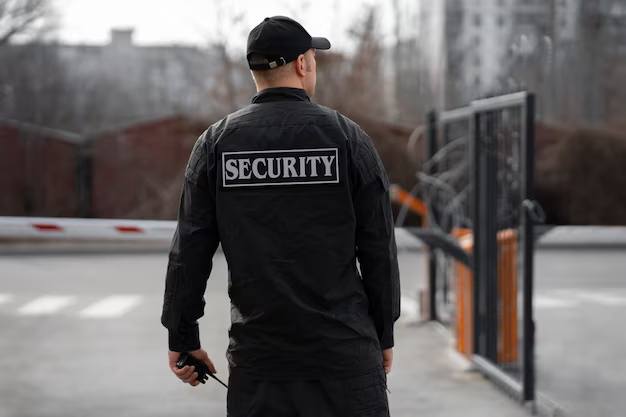
A clearly visible guard positioned near entrances, parking areas, access points, or high-traffic zones creates a level of awareness that naturally influences behavior. Most incidents do not begin as major threats. They often start with smaller issues that gradually escalate when nobody is paying attention. A visible security presence interrupts that process surprisingly early.
The goal is not to make people uncomfortable. If anything, the opposite tends to happen. Employees, residents, visitors, and customers usually feel more at ease when they know trained professionals are nearby monitoring the environment.
Access Control Prevents Problems Before They Start
Many security incidents can be traced back to a single basic issue. Somebody gained access to an area they were never supposed to enter.
Construction sites deal with it. Corporate offices deal with it. Residential communities deal with it. Event venues deal with it too.
That is why access control became such an important part of modern security planning. Verifying credentials, monitoring entry points, checking visitor logs, and controlling vehicle access all reduce opportunities for unauthorized activity. The process may seem routine from the outside, but honestly, those routine checks often prevent larger problems from developing later.
The strongest security operations usually focus on controlling access before responding.
Observation Often Solves More Than Intervention
One interesting thing about experienced security professionals is how much attention they pay to behavior patterns.
People moving through an environment normally tend to follow predictable routines. Employees enter through familiar doors. Residents return home at expected times. Visitors generally move toward destinations with a clear purpose.
When something falls outside those patterns, it tends to stand out pretty quickly.
That does not automatically mean somebody is doing something wrong, obviously. However, recognizing unusual activity early gives security personnel an opportunity to investigate before the situation escalates. Prevention often comes down to identifying small warning signs rather than waiting for larger incidents.
Technology Expanded Prevention Capabilities
Security technology has changed a lot over the years, and not just in ways most people immediately notice.
Cameras became smarter. Monitoring systems became faster. Reporting tools became more detailed. Real-time communication allows security teams to share information almost instantly across multiple locations.
What makes these systems valuable is how they support decision-making rather than replace it.
A camera may capture activity. A dashboard may display alerts. Drone-assisted patrols may provide additional visibility. But trained security personnel still evaluate the information and decide whether action is needed. The technology increases awareness, while experience provides the judgment behind it.
The combination tends to work much better than either one operating alone.
Consistency Is Usually The Difference
Security planning often receives attention when something significant happens. What receives less attention is the consistency required on ordinary days.
- Routine patrols matter.
- Regular inspections matter.
- Documentation matters.
- Communication matters.
Most prevention strategies succeed because somebody follows the same process repeatedly rather than waiting for a reason to become vigilant. Consistency creates predictability, and predictable environments are usually easier to secure than chaotic ones.
It is not particularly exciting work from the outside, honestly, but it tends to be where some of the most effective prevention happens.
Why Prevention Became The Priority
The strongest security programs today are built around reducing opportunities rather than simply responding to emergencies. Visible personnel, controlled access, behavioral observation, technology integration, and consistent monitoring all work together to discourage incidents before they gain momentum.
That broader prevention mindset is part of what organizations increasingly look for when selecting a security provider. Companies like Vigilant Eye Security operate across California and Arizona with licensed, insured, and bonded teams supported by professionals from military and law enforcement backgrounds. Through services ranging from armed and unarmed guards to mobile patrols, fire watch, executive protection, concierge security, real-time monitoring tools, and drone-assisted patrols, the focus extends beyond responding to threats alone. The objective is to create environments where many incidents never have the opportunity to occur in the first place, which, honestly, is usually the outcome clients care about most.
Featured Image Source: https://img.magnific.com/free-photo/portrait-male-security-guard-with-barbed-wire-fence_23-2150368768.jpg