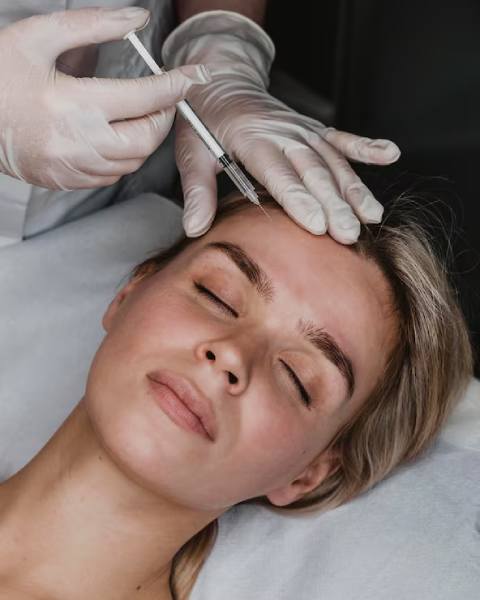
Facial Movement Patterns Considered During Anti-Wrinkle Injections
Most people think wrinkle treatment starts and ends with what they see in the mirror. A few lines around the eyes. Maybe deeper folds across the forehead. Sometimes it is just a general feeling that the face is holding expressions a little longer than it used to. But what often gets overlooked is how much those lines are actually shaped by movement itself rather than still features.
Facial muscles do not work in isolation. They work in patterns. One small expression in the brow can trigger subtle movement across the cheeks and eyes simultaneously. That is one of the reasons experienced practitioners approach anti-wrinkle injections with far more attention to motion than most people expect. It is not just about softening a line. It is about understanding how the entire face behaves when it talks, reacts, smiles, or tenses under stress.
And that is where treatment outcomes tend to separate. Not always in obvious ways at first, but in how natural the result feels over time.
Why Movement Patterns Matter More Than Static Lines
The thing is, most people only ever see their face when it is still. In the mirror. In a photo. Under bright bathroom lighting that tends to highlight everything at once. But real facial ageing is not static. It happens through repetition.
The same expressions are repeated thousands of times. Slight brow furrows during concentration. Micro-squints in bright light. Small tightening around the mouth during stress or focus. Over time, those repeated movements begin to leave a trace even when the face is relaxed.
Anti-wrinkle injections work by temporarily relaxing specific muscle activity, but the skill is not just in knowing where to treat. It is in knowing what to leave alone because over-treating one area can sometimes shift movement elsewhere in ways that feel unnatural to the person over time.
The goal is not to freeze expression. The goal is to reduce unnecessary tension while preserving natural movement patterns that keep the face feeling like the person looking back in the mirror.
The Role of Assessment in Treatment Planning
Before any treatment begins, experienced practitioners spend more time watching than doing. They observe how a person speaks, how they smile without thinking, how their eyebrows move when they explain something.
That observation stage often matters more than the injection itself.
It is also where clinics like Define Clinic tend to structure their approach differently. Instead of focusing solely on visible lines, the assessment often begins with movement mapping, where tension builds. Which muscles are overactive? Which areas are compensating for others?
The interesting part is that most clients do not realise how much their own expressions reveal until someone actually points it out. A small eyebrow lift on one side. A subtle tightening in the jaw during speech. Tiny asymmetries that only show up when the face is in motion rather than still.
And once you start noticing those patterns, it becomes clearer why results can vary so much between people, even when they are treated for similar concerns.
Why Over-Treatment Changes Expression
One of the most common misconceptions is that stronger treatment automatically means better results. But facial muscles do not operate like independent switches. They are connected through overlapping movement systems.
If one area is relaxed too aggressively, another area often picks up the slack. Sometimes that means the brow feels heavier. Sometimes it means smile patterns shift slightly. Other times, it is more subtle, like expressions that feel less responsive than expected.
The challenge in anti-wrinkle injections is not just reducing movement. It maintains balance across multiple facial zones so the expression still feels fluid.
That balance is what makes the difference between a face that looks treated and a face that simply looks rested.
It is also why results tend to vary so widely between providers, even when the same product and dosage are used.
What Clients Usually Notice After Treatment
Interestingly, most clients do not describe results in technical terms.
They rarely talk about muscle relaxation or movement patterns. What they usually notice is simpler.
They look less tense.
Their expressions feel softer.
They stop noticing certain lines in the mirror.
Sometimes they just feel like they look better rested when they don’t have them, and they can’t really explain why.
This perception is often the result of a series of small changes, rather than one big change.
When the treatment is in harmony with the face’s natural movement rather than opposing it, the results are more likely to last over time.
Why Experience Matters More Than Technique Alone
Treatment tools are fairly typical. The interpretation is much more variable.
Two practitioners can see the same face and have slightly different priorities. One might even eliminate all the apparent lines. Yet another could be about maintaining natural expression while smoothing out certain tension points.
Neither method is inherently bad. But the client’s long-term experience could be very different.
That is why consultation and assessment can be as crucial as the treatment. Once the facial movement patterns are grasped correctly, the technique is less about correction than about refinement.
And in most cases, refinement is what makes the results look natural months after, rather than overly refined within weeks.
This focus on movement-based assessment is often the hallmark of the entire treatment experience in clinics like Define Clinic, which is why the results are balanced, natural, and more aligned with how the face moves than how it looks in a still photo.
Featured Image Source: https://img.freepik.com/free-photo/young-woman-getting-beauty-injection_23-2148825344.jpg?semt=ais_hybrid&w=740&q=80