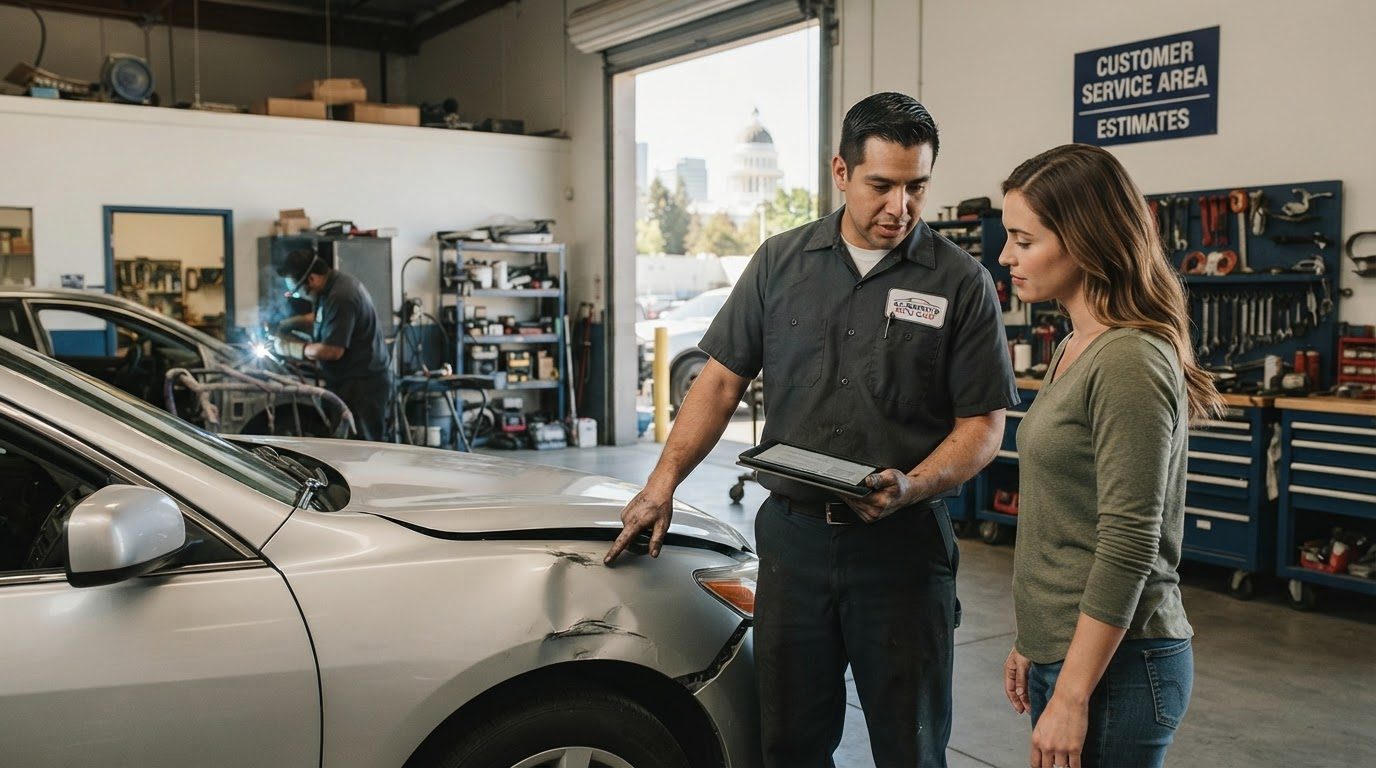
Finding the Right Auto Body Repair Shop in Sacramento After an Accident
A collision can leave a vehicle looking driveable while concealing bent structural members, damaged wiring, or misaligned safety sensors. Choosing the right repair facility in Sacramento therefore involves more than finding the closest shop or the lowest estimate.
Drivers searching for auto body repair shops near me should compare technical capability, communication, warranty coverage, and experience with the specific vehicle—not just convenience or star ratings. The right choice depends on whether the car needs cosmetic work, structural correction, glass replacement, or post-repair calibration.
For a Sacramento driver evaluating options, Relux Collision is one local facility to consider alongside other qualified shops. A useful comparison begins with an in-person inspection and a written explanation of the proposed repair plan.
Start With the Repair Help You Need
A general mechanical repair shop handles systems such as engines, brakes, transmissions, and suspension. A collision repair facility is equipped for crash-related body, structural, refinishing, and safety-system work. Contact a collision specialist after an accident when panels are displaced, airbags deployed, suspension geometry changed, or the vehicle may have suffered frame damage.
Common services include:
- Structural and collision repairs, including unibody measuring and correction.
- Bumper, fender, quarter-panel, hood, door, grille, and mirror replacement.
- Conventional dent repair and paintless dent repair, when the metal and paint remain suitable.
- Scratch removal, color matching, blending, and clear-coat refinishing.
- Windshield and other automotive glass replacement.
- Diagnostic scanning, ADAS inspection, and calibration for cameras, radar, and related sensors.
Visible damage does not tell the whole story. A minor-looking bumper impact can affect parking sensors, radar brackets, absorbers, reinforcement beams, or wiring. Modern vehicles may require pre-repair and post-repair scans, wheel-alignment checks, and calibration after a windshield replacement or suspension-related impact.
Sacramento’s hot, dry summers also make correct paint preparation and curing important, while winter rain can expose poor sealing or incomplete corrosion protection. Ask how the shop protects repaired seams, applies corrosion inhibitors, and verifies factory repair procedures.
What to Look for in a Local Body Shop
Distance matters when arranging transportation, but technical credentials matter more. Look for I-CAR Gold Class training, OEM certifications, and documented familiarity with your vehicle’s make and model. OEM procedures may specify sectioning locations, weld types, adhesive use, torque values, and whether a component can be repaired or must be replaced.
A credible shop should be able to explain its capabilities in:
- Three-dimensional structural measuring using a computerized measuring system.
- Manufacturer-specific repair information and approved replacement methods.
- Professional refinishing equipment, paint mixing, spray-booth filtration, and color-matching technology.
- Diagnostic scanning and ADAS calibration, either in-house or through a qualified partner.
- Safe handling of aluminum, high-strength steel, electric vehicles, and hybrid systems when applicable.
- Written warranties covering labor, paint, and parts.
I-CAR certification describes collision-repair training; it is not the same as ASE certification, which generally applies to automotive service technicians. Shops should also follow applicable OSHA workplace practices and environmental rules for paint, solvents, waste, and ventilation.
Review recent feedback, but read for specifics: Was the vehicle returned on time? Did the shop provide progress updates? Were warning lights cleared and systems calibrated? Photos of completed work can reveal panel gaps, overspray, color blending, and finish quality more effectively than a generic rating.
Estimates, Insurance, and Out-of-Pocket Repairs
A proper estimate identifies visible damage and notes that a supplement may be required after disassembly. It should separate parts, labor, refinishing, materials, scans, calibration, taxes, and expected repair stages. In Sacramento, posted labor rates commonly vary from roughly $75 to more than $150 per hour depending on whether the work is body, paint, mechanical, structural, or diagnostic. The rate alone does not determine the final cost.
Before authorizing work, ask:
- Will the shop communicate directly with my insurer?
- Are proposed parts OEM, aftermarket, or recycled?
- What happens if hidden damage is discovered?
- Is rental-car or shuttle assistance available?
- Is deductible assistance offered, and what terms apply?
An insurer’s preferred network may simplify approvals, but California drivers generally can choose their repair facility. A shop can work with an insurer without being obligated to accept every adjustment. Confirm what is covered, what you may pay, and whether the insurer’s estimate differs from the shop’s repair plan.
Minor bumper scuffs or small dents may be less expensive to pay for directly, particularly when the repair approaches the deductible. Safety-related, extensive, or multi-panel damage usually warrants a formal claim and detailed inspection. Avoid any deductible arrangement that is not clearly documented or that encourages unsafe shortcuts.
What the Repair Process Looks Like
A typical workflow includes:
- Initial contact, safety advice, towing, or vehicle drop-off.
- Damage photography, diagnostic scanning, and an initial estimate.
- Insurance review, authorization, and parts planning.
- Disassembly to identify hidden damage and prepare supplements.
- Structural, body, mechanical, glass, and refinishing repairs.
- Reassembly, scan clearing, wheel alignment, and ADAS calibration.
- Quality inspection, road testing where appropriate, detailing, and delivery.
Repair duration depends on damage severity, parts availability, insurer approvals, and technician workload. A bumper replacement might take several business days; structural or multi-panel repairs can take several weeks. Hidden damage behind a bumper, backordered sensors, shipping delays, or a supplement can change the original schedule.
The final inspection should verify panel alignment, paint consistency, lighting, restraint-system status, warning messages, steering and suspension behavior, and required calibrations. Cosmetic appearance is only one measure of a safe repair.
Questions to Ask Before Choosing a Nearby Shop
Use this checklist during a call or estimate visit:
- Are your technicians trained or certified for my vehicle?
- Do you follow current manufacturer repair procedures?
- Can you arrange towing or transportation?
- Will you assist with insurance paperwork?
- How will you inspect and document non-visible damage?
- What warranty applies to labor, paint, and parts?
- Will I receive progress updates and revised completion dates?
Compare two or three written estimates, but do not choose solely on the lowest price. A cheaper estimate may omit scans, calibration, corrosion protection, blend operations, or proper structural procedures. Compare inclusions line by line and ask why the estimates differ.
A firm price from photographs alone is inappropriate for substantial collision damage. Photos can support an initial range, but disassembly and diagnostic testing are often necessary before a shop can identify hidden damage accurately.
Frequently Asked Questions About Local Collision Repair
What is the difference between a collision shop and a body shop?
The terms overlap. A body shop may handle dents, paint, panels, and cosmetic repairs. A collision-focused shop also manages crash damage, structural components, restraint systems, insurer documentation, diagnostic scanning, and ADAS calibration.
How much do most body shops charge per hour?
Rates vary by region, repair category, vehicle technology, technician specialization, and insurer agreement. Body and paint labor may be priced differently from structural or mechanical labor. The estimate’s total—including parts, materials, refinishing, scans, and calibration—is more meaningful than the hourly rate alone.
What is the $3,000 rule for car repairs?
It is an informal budgeting guideline suggesting that drivers compare repair costs with a vehicle’s value when damage becomes substantial. It is not a universal California law or insurance rule. Repairability, safety, diminished value, prior condition, and the insurer’s valuation all matter.
What is usually the most expensive part of a collision repair?
High-cost areas can include unibody or frame correction, airbags and pretensioners, radar and camera systems, electric-vehicle components, drivetrain or suspension damage, and extensive panel replacement and paint blending. A seemingly small impact can become expensive when safety systems are involved.
Can a body shop help after a vehicle is not drivable?
Yes. A collision shop may coordinate towing, communicate with the insurer, arrange rental transportation, and advise whether the vehicle should be moved. Do not drive a car with leaking fluids, deployed airbags, steering or brake problems, exposed wiring, damaged wheels, or severe structural damage. Towing it safely prevents additional damage and supports a more accurate inspection.