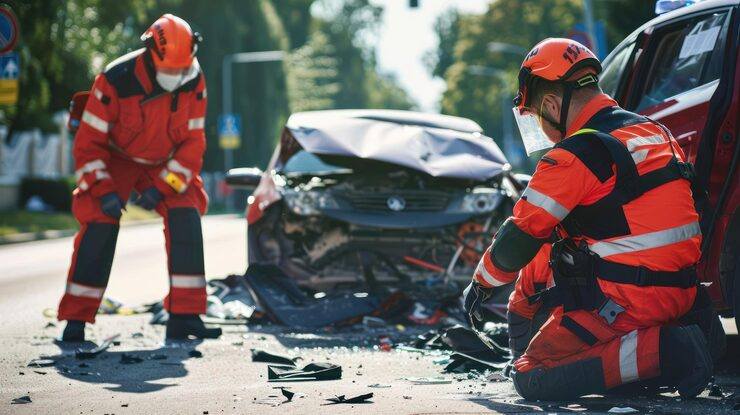
Accident Scene Management Practices Used by an Emergency Towing Company
Most people only think about towing after something has already gone wrong. A crash on the shoulder during rush hour. A disabled vehicle is sitting halfway into an intersection, and traffic starts stacking up behind it. Sometimes it’s a blown tire in the middle lane with nowhere safe to pull over, and suddenly what should have been a normal drive turns into a situation that feels way more chaotic than it probably looked five minutes earlier. The towing part matters, obviously, but accident scene management usually starts long before any vehicle is actually hooked up to a truck.
That’s where an experienced towing company tends to separate itself from someone who simply shows up with a tow truck and flashing lights. Managing an accident scene properly means thinking about traffic flow, vehicle positioning, road safety, debris hazards, and the condition of the drivers involved, all at the same time. In a place like Miami, where traffic already moves aggressively on a normal day, even a relatively minor collision can create dangerous conditions surprisingly fast if the scene isn’t handled correctly from the beginning.
This post looks at how professional towing services approach accident scene management in real-world situations, which procedures actually matter once crews arrive, and why recovery work is usually more about organization and safety than people realize from the outside. A lot of the work happens before the tow truck ever starts moving a vehicle.
Securing the Immediate Area
The first few minutes after arrival are usually focused on stabilizing the scene itself. Before anything is loaded, operators pay attention to where traffic is moving, whether fluids are leaking onto the roadway, and whether any vehicles are positioned in ways that could cause a secondary collision. Honestly, secondary accidents are one of the biggest concerns during roadside recovery because distracted drivers tend to focus on the original crash rather than what’s happening directly in front of them.
Warning lights, cones, reflective triangles, and truck positioning all help create a temporary safety buffer around the scene. Depending on the roadway, tow operators may angle the truck slightly to shield the damaged vehicles while maintaining sufficient space for traffic to continue moving around the recovery area. Small details like positioning matter a lot more than most people would expect, once cars are flying past only a few feet away.
Handling Damaged Vehicles Carefully
Accident recovery differs from standard roadside towing because damaged vehicles no longer roll normally. Broken suspension components, locked wheels, leaking fluids, or body damage hanging close to the pavement can all complicate what should otherwise be a straightforward tow. Trying to rush that process usually creates more damage.
Flatbed towing is commonly used in accident recovery because it keeps the entire vehicle lifted off the road surface during transport. Operators often need to winch vehicles slowly onto the bed while monitoring balance points and avoiding further stress on already damaged sections of the frame. Motorcycles create their own challenges, too, since even minor instability during loading can tip the bike unexpectedly if it isn’t secured correctly from the start.
Managing Traffic Without Creating More Problems
One thing people rarely notice during an accident recovery is how much attention goes into keeping the roadway functional while the work is happening. Blocking every lane completely may feel safer initially, but it also increases congestion, confusion, and driver frustration around the scene. Good recovery crews work efficiently enough that traffic disruption stays as limited as possible without sacrificing safety.
In busier parts of Miami, timing becomes important as well. Afternoon traffic, limited shoulder space, construction zones, and narrow roadway access all change how a recovery gets approached. Sometimes moving one disabled vehicle just a short distance first creates enough room to safely complete the larger recovery afterward. Those decisions are usually made in real time based on the conditions crews encounter upon arrival.
Equipment Transport Requires Different Planning
Commercial equipment recovery adds another layer entirely compared to passenger vehicles. Construction machinery, pallet loads, and transport materials often require different tie-down methods, weight distribution planning, and loading angles depending on what is being moved. Some equipment can’t simply be dragged or lifted the same way a standard vehicle can.
Light machinery transport, in particular, tends to require careful loading because uneven weight placement can cause it to shift during transport if it isn’t secured correctly. Operators handling commercial transport work generally spend a lot of time learning how different types of equipment behave once they’re loaded onto trailers or flatbeds. It’s the kind of experience that matters more in practice than it does on paper.
Why Experience Changes Recovery Outcomes
Accident scenes rarely unfold in clean, predictable ways. Drivers are stressed. Traffic keeps moving. The weather changes quickly. Sometimes the recovery itself ends up being the easiest part once all the surrounding factors come into play. What experienced towing crews really bring to these situations is the ability to stay methodical even when everything around them feels disorganized.
Working with a company like Quintana Towing Services LLC means dealing with operators who understand that accident recovery is not only about removing damaged vehicles from the road. It’s also about restoring safety, minimizing additional risk, and helping people get through an already difficult situation with as little added stress as possible. That kind of approach tends to matter a lot once you’re standing on the side of the road, realizing how quickly an ordinary day can shift directions.
Featured Image Source: https://img.freepik.com/premium-photo/emergency-personnel-providing-first-aid-scene-car-accident_693425-37091.jpg?semt=ais_hybrid&w=740&q=80